
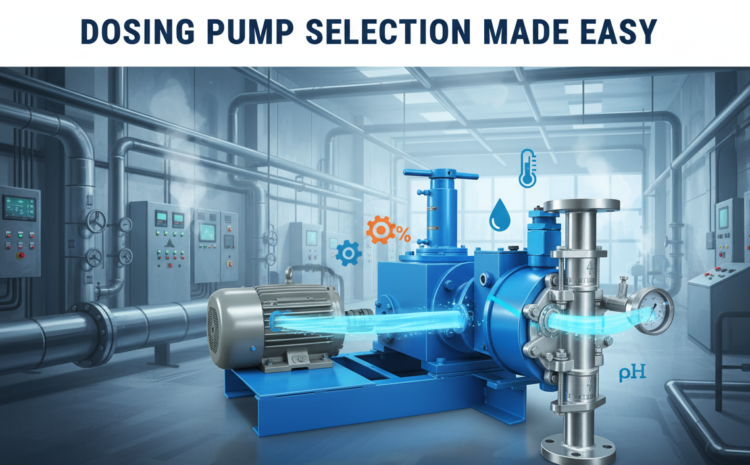
Dosing Pump Selection Made Easy: Find the Best Fit for Your Needs
Not all dosing pumps are created equal! 💡 Selecting the right pump is crucial for optimizing operations, improving efficiency, and ensuring long-term reliability. With so many options available, it’s important to understand the critical factors before making your decision.
Here’s a step-by-step guide to help you choose the perfect dosing pump for your application. 🛠️💧
1. Flow Rate & Pressure
The very first step is defining your required flow rate (capacity in LP) and the discharge/operating pressure. These two parameters set the baseline for selecting a suitable pump. Choosing an undersized or oversized pump can cause inefficiency, poor dosing accuracy, and higher operational costs.
2. Pump Type
Different applications require different pump designs. Common types include:
- Plunger Pumps – High accuracy, suitable for high-pressure dosing.
- Diaphragm Pumps – Ideal for aggressive, toxic, or abrasive chemicals.
- Peristaltic Pumps – Great for shear-sensitive fluids.
- Piston Pumps – Reliable for high-viscosity fluids.
- Solenoid Pumps – Compact and cost-effective for low-flow applications.
Each type has unique advantages, so the right choice depends on the fluid characteristics and application demands.
3. Chemical Compatibility
Not all pump materials can handle every chemical. Always check the compatibility of pump materials (PTFE, SS, PVC, PP etc.) with the fluid being dosed. Consider:
- pH level
- Viscosity
- Temperature
This prevents issues like corrosion, wear, or contamination, ensuring longer service life.
4. Control Mechanism
Think about how you’ll control the pump:
- Manual Control – Simple systems with fixed or adjustable flow rates.
- Automated Control – Integration with PLCs, SCADA, or sensors for real-time monitoring and dosing accuracy.
5. Environmental Considerations
Your installation environment matters. Ask yourself:
- Will the pump operate indoors or outdoors?
- Is it going into a hazardous area?
- What’s the ambient and process temperature range?
Choosing the right design ensures safe, reliable performance under site-specific conditions.
6. Maintenance & Durability
A pump that’s easy to maintain is a pump that saves you time and money. Look for:
- Service-friendly designs (easy part replacement)
- Durable components to minimize downtime
- Proven track record of reliability
Long-term performance is just as important as initial specifications.
Choosing the right dosing pump isn’t just about technical specs—it’s about achieving efficiency, safety, and cost-effectiveness in your process. By carefully considering flow rate, pump type, chemical compatibility, control, environment, and maintenance, you can make a smart investment that delivers long-term value.💡 At SR Metering, we specialize in designing and manufacturing dosing pumps and systems tailored to your application. Contact our experts today to find the perfect solution for your needs!